
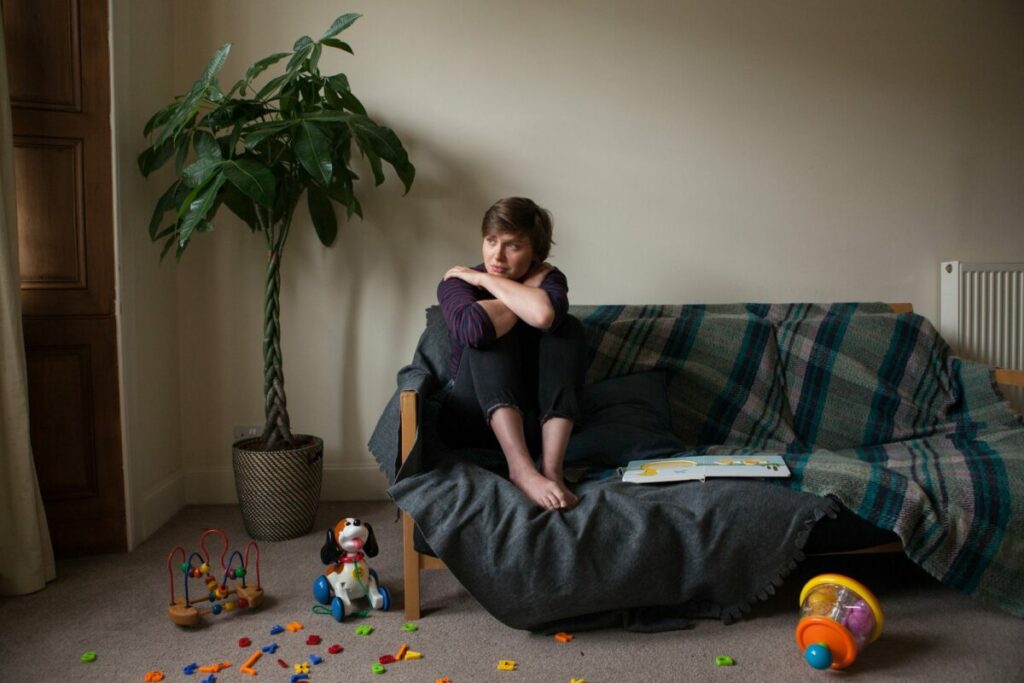
A financially independent woman is someone who earns enough to support themselves and their children, who contributes the largest share to family expenditure, and in my case ended up supporting the abusive partner financially.
Here’s how it happened.
I met and fell madly in love with a penniless artist . We married in community of property because, I thought, if I were so poor I would want my partner to give me the respect and protection of community of property.
We had children. My husband argued he couldn’t help with childcare because he needed to build his career and even though he generated no income, his work was of equal worth to mine.
I paid for a full time nanny-housekeeper, played with our kids before and after work and put them to bed at night. I thought it was a temporary situation until his career took off.
My husband started becoming violent. I attributed the aggression to mental illness resulting from childhood trauma. I encouraged my husband to go for therapy and paid for it.
I started to feel the strain financially and had to find another job to make ends meet. I became totally exhausted, both physically and emotionally and was socially isolated.
When I was at my most vulnerable, my husband severely assaulted me in front of the children. He had gone too far and I realized I had to take drastic action to protect us. Little did I realize how drawn out, expensive and exhausting the process would be.
I had to pay for a private lawyer to get divorced. My ex could use legal aid to contest and draw out the proceedings without any cost to himself.
I had removed myself and our children from our shared home (bought by me) and so had to continue paying the bond (providing him with free accommodation) while also paying rent for myself and the kids for the multi-year separation and divorce process.
The court eventually voided my ex-husband’s community of property claims to the assets I had paid for, but I still had to spend additional time and money evicting him from my house.
In retrospect, I should have made different choices along the way:
- no community of property,
- using the protection order to make him leave our house rather than leaving myself.
But once those choices were made (and they made sense at the time), the usual support systems for abused women could not help me. I earned too much for pro bono legal assistance, but not enough to carry private legal fees easily. I did not need a shelter; I needed help removing my abuser from my house. I needed the legal system to fast track my civil matters (divorce, eviction) based on their connection with a criminal matter of abuse.
I am not sharing any of this to ask for support or sympathy for our family, rather I hope it will generate discussion and ideas to help others who find themselves in similar situations.
The epidemic of domestic abuse still predominantly harms poorer women and we need to ensure that nothing undermines the support systems painstakingly built for them. If we want to see women rise, we (as women, along with broader society) need mechanisms to protect and support those women who have gained a measure of independence.
Note: If you enjoyed this article, and would like to stay updated with more, you can:
- Subscribe to our free weekly Jozikids newsletter for parents in Gauteng
- Like us on Facebook
- Follow us on Instagram












10 Responses
Dr Tara,
Thanks for sharing your story so openly to encourage other women who may be in the same situation.
Our paths crossed when you bought the chairs for your children – Liz:-)
Thank you for this article… I truly hope it helps many women. Financial independence of women (and men!) is a subject matter very close to my heart and as a result of the work I do, I’d like to encourage anyone reading this article who would like to improve their financial literacy/ education (for whatever reason) to please go to the https://www.truthaboutmoney.co.za trust website, where you can apply for a financial education (at Boston City Campuses nationwide), wills and estate services and debt counselling for free. It’s an amazing initiative which really is changing lives.
Another idea for women who may need affordable legal help, is to please look at the options provided by https://www.lipco.co.za – they too provide an amazing legal service for a small monthly fee.
Where can a man get assistance to get his children and him out of a physical, emotional and financially abusive relationship? My so-called wife turns violent if she does not like what she hears and she doesn’t want the children to leave if I have to leave and I cannot leave without the children. She also threatens my life and she mentioned that if I leave with the children, she will track us down. She also has taken a second life insurance on me. So, how do I get to work and how do the children get to school if we just pick up and leave?
Dear Dave,
I am so sorry to hear of your situation. There are definitely organisations that can help. Try Lawyers for Human Rights. Sonke Gender Justice also has a strong programme to support men in their family roles and they may have advice on where to get legal and other kinds of assistance. You and your children have every right to live without feeling threatened. I hope you are able to find the help that you need.
I was in the same unfortunate position. There is no decent legal assistance for mothers with an income and I had to carry the cost of the divorce as well as try and make a living on my salary. It’s hard on the budget but hang in there!! I decided after my divorce 9 months ago, that there is a need for someone to stand up for woman in the same desperate situation that I was in, so I am currently studying LLB (law) to put myself in a position where I can help. Good on you for standing up for yourself, stay strong!
Dear Butties, thanks for your comment and I find it so inspiring that you are now studying law to make things better for others. I am a researcher, and so am also thinking of ways to move the issue of abused mothers with an income from anecdotes (of which I have heard sooooo many since I started talking openly about my experience) to a more solid empirically documented phenomenon. I also have some other practical ideas for interventions. I would love to talk more with you. Perhaps we can do something together. Please find me on LinkedIn or Facebook. tara
Dear Dr Tara,
I am in the same boat my dear currently, un/fortunately in my case he was only unemployed for 3 years after we met during our relationship, I started applying for the Protection order from Friday and I received it only yesterday and I still had to drive myself to deliver it to his nearest police station to his work address since he was moved with the help of the police from our house on Friday, I must say the whole experience was so uncomfortable, from going to the police station to the court, you get funny looks and questions, I totally do not blame the women who do not bother go for this option, it is just to exhausting!!! I wish you all the best, I hope I will be fine too.
Dear Thabisile, I am sorry that you are in the middle of this right now. Yes, it is exhausting and I also got all sorts of inappropriate comments from court orderlies in the process of completing the criminal assault case (luckily I had no problems with the police or the actual magistrates). But if those of us with more education and resources don’t use the legal system and hold its representatives to account, how will all those women with fewer resources manage? In the end it is worth it, in my experience, not least because the process makes you write it down and draw a line under things for yourself, which is a necessary part of moving on with one’s life. I wish you strength and patience (with the system and with yourself – allow yourself to be angry and frustrated – but don’t give up!). It will take a while, but yes, I am sure you will be fine in the end.
This article was such a support and motivation. I am also getting divorce and my husband is getting to me via sms/whatsapp. Where can I go for help.
Dear Hantie, thank you for your comment. Depending on where you are based, there are organisations that can provide advice and assistance. In Johannesburg I would recommend the Tshwaranang Legal Advice Centre which is located in the Braamfontein Centre on Bertha Street in Braamfontein. Generally, keep a careful written record of all abusive communications – not just in your phone but in a separate document where you track the dates and times, your responses, etc, including what is said verbally. This is very important for any legal process, but it also helps you become more confident by showing yourself and others that you are not making things up and that it is not about isolated incidents. Being able to quote specific words that were exchanged on a specific day and time is much more powerful that giving vaguely remembered examples or “he said things like…” generalisations when you need to explain your choices. Good luck and do not wait to get help. You deserve support.